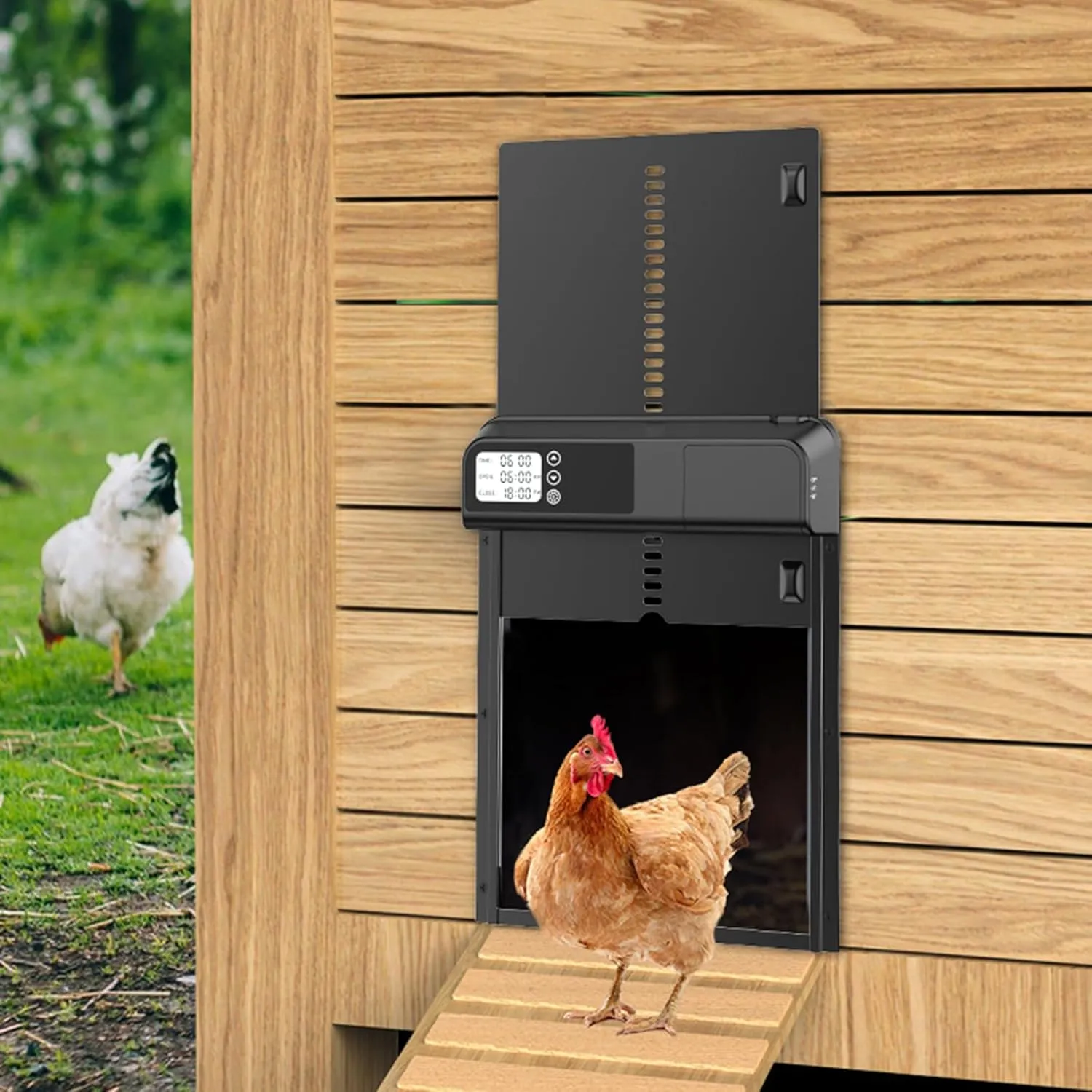
What is an Automated Chicken Coop Door
An automated chicken coop door is a device designed to open and close the entrance to your chicken coop automatically. This innovation offers a significant upgrade over traditional manual doors, which require you to be present at dawn and dusk to secure your flock. Automated doors use a motor, timer, or light sensor to control the opening and closing mechanism, providing convenience and security for both you and your chickens. They are typically constructed from durable materials and are designed to withstand various weather conditions and deter predators. With an automated door, you can rest assured that your chickens are safe and secure, even when you’re away from home. Furthermore, these doors often come with features like fail-safe mechanisms and manual override options, adding an extra layer of protection and flexibility.
Benefits of an Automated Chicken Coop Door
Improved Safety

Automated chicken coop doors significantly enhance the safety of your flock. By automatically closing the door at dusk, they prevent predators like foxes, raccoons, and coyotes from entering the coop. This is especially crucial in areas where predator activity is high. The timely closure ensures your chickens are protected throughout the night, reducing the risk of injury or loss. Furthermore, the sturdy construction of these doors provides an additional barrier against potential intruders. The reliability of an automated system means you don’t have to worry about forgetting to close the door, a common oversight that can have devastating consequences for your chickens.
Convenience and Time Saving
One of the most significant benefits of an automated chicken coop door is the convenience it offers. You no longer have to wake up early or rush home to open or close the coop door manually. This is especially beneficial for those with busy schedules or who travel frequently. An automated system allows you to set a timer or rely on light sensors to manage the door’s operation, freeing up your time and providing peace of mind. This automation simplifies chicken keeping, making it easier to integrate into your daily routine and reduces the daily chore of manually opening and closing the coop.
Protection from Predators
Predator protection is a critical function of an automated chicken coop door. The doors are designed to close securely at night, preventing nocturnal predators from accessing the coop. This is a vital feature, as predators often hunt during the hours of darkness. The timely and consistent closure of the door ensures your chickens are safe from threats like foxes, raccoons, weasels, and other animals that may be looking for an easy meal. With this automated system, you greatly reduce the risk of losing your birds to predation, which in turn reduces stress for both you and your chickens.
Energy Efficiency

While the primary function is security and convenience, automated chicken coop doors can also contribute to energy efficiency. By closing the coop door at night, you help to retain heat inside the coop during colder months. This can reduce the need for supplemental heating, leading to lower energy consumption. Additionally, the doors can be programmed to open early in the morning, allowing natural sunlight to help warm the coop and allowing your chickens to begin their day on time. Overall, these doors help create a more sustainable and energy-conscious environment for your chickens.
Reduced Stress for Chickens
Automated chicken coop doors contribute to the well-being of your chickens by providing a consistent and secure environment. With the doors opening and closing automatically, the chickens are less stressed and they adapt to the routine. This consistency helps to regulate their behavior and sleep patterns. Moreover, the secure closure at night eliminates the fear of predators, allowing your chickens to rest peacefully. A stress-free environment supports overall health, resulting in more productive and content chickens. The reliable protection offered by the door ensures that your flock can thrive.
Choosing the Right Automated Chicken Coop Door
Consider Size and Weight of Door

When selecting an automated chicken coop door, consider the size and weight of the door itself. The door needs to be large enough to accommodate your chickens comfortably, allowing them easy access to the coop. The door’s weight is also important, as a heavier door may require a more powerful motor, which increases the overall cost and energy consumption. Ensure that the door dimensions match the opening of your coop and that the design prevents gaps that predators could exploit. Measuring your coop’s opening and considering the size of your flock will guide your choice of the right size door.
Material Durability
Material durability is a crucial factor. The best automated chicken coop doors are made from robust materials that can withstand the elements and potential attacks from predators. Look for doors made from aluminum, sturdy plastics, or treated wood. These materials are weather-resistant and provide a strong barrier against intruders. The door’s components, such as the motor housing and control system, should also be protected against moisture and harsh weather conditions. The durability of the door ensures it functions reliably for years, providing long-term protection and peace of mind for your chickens.
Power Options
Automated chicken coop doors come with various power options. The most common include battery-powered, AC-powered, and solar-powered systems. Battery-powered doors are a convenient option, especially if you lack a nearby power outlet. They typically use rechargeable batteries. AC-powered doors need to be plugged into a power source, which requires a suitable outlet near the coop. Solar-powered doors are an environmentally friendly option that utilizes solar panels to charge the battery. Choose the power option that best suits your location, availability of power sources, and environmental preferences. Solar options reduce your carbon footprint, while battery-powered systems offer flexibility in placement.
Timer and Sensor Features

The timer and sensor features of an automated chicken coop door are critical for its functionality. Timers allow you to schedule the door’s opening and closing times, providing a consistent routine for your chickens. Light sensors detect the ambient light level and automatically open or close the door based on sunrise and sunset. Some advanced models combine both features, allowing for greater flexibility and customization. When selecting a door, look for options with easy-to-program timers and reliable light sensors. These features ensure that your chickens are safely secured at the appropriate times.
Step-by-Step Guide to Building an Automated Chicken Coop Door
Gathering Materials
Before beginning your DIY automated chicken coop door project, gather all the necessary materials. These typically include a sturdy door, a motor (such as a linear actuator or geared motor), a control system (a timer or light sensor), a power source (battery, AC adapter, or solar panel), appropriate wiring, and mounting hardware. You’ll also need tools like a drill, screwdriver, measuring tape, and saw. Choosing durable, weather-resistant materials will ensure the longevity of your door. Careful planning and preparation are the keys to a successful build. It’s essential to have everything at hand before starting.
Building the Door Frame and Door

Construct the door frame and the door itself according to the dimensions of your coop opening. The door should fit snugly within the frame, leaving minimal gaps to prevent predator entry. Use weather-resistant wood or metal for the frame and door, ensuring the materials are durable. Assemble the frame and door with screws, nails, or other suitable fasteners, making sure all joints are secure. The door should slide or swing smoothly. Consider adding weather stripping around the door to further seal the coop and protect against drafts and moisture. Careful measurements and precise cuts are crucial to this step.
Installing the Motor and Control System
Mount the motor and the control system (timer or light sensor) securely to the door frame or coop wall. Position the motor to effectively drive the door’s movement. Attach the motor arm or drive mechanism to the door. Connect the control system to the motor according to the manufacturer’s instructions. This may involve wiring connections and programming the timer or calibrating the light sensor. Ensure that all wiring is properly insulated and protected from the elements. The motor should operate quietly and smoothly, providing consistent door movement. Double-check all connections to avoid malfunctions.
Setting Up the Timer and Sensors
Configure the timer or light sensor according to your needs. If using a timer, set the desired opening and closing times, considering the local sunrise and sunset times. For light sensors, adjust the sensitivity so the door opens and closes at the appropriate light levels. Test the settings to ensure the door operates correctly. Some systems also allow for manual override, providing you with the option to open or close the door at any time. Programming the system correctly ensures that your chickens have access to their coop at the appropriate times.
Testing and Calibration

Before fully committing to automated operation, thoroughly test and calibrate the system. Cycle the door through its opening and closing routines several times to verify smooth operation and proper alignment. Check the motor’s force and speed to ensure the door moves easily without straining the motor. Adjust the timer or light sensor settings as needed to ensure accurate operation based on sunrise and sunset. Make sure the door closes tightly, preventing any gaps. Regular testing and calibration can prevent any problems from arising during normal operation.
Maintaining Your Automated Chicken Coop Door
Regular Cleaning and Lubrication
Regular cleaning and lubrication are essential for maintaining your automated chicken coop door’s optimal performance. Remove any debris like dust, leaves, or cobwebs that may accumulate around the door, motor, and control system. Use a damp cloth to wipe down components. Apply a lubricant, such as silicone spray, to moving parts like hinges, tracks, and the motor mechanism, reducing friction and ensuring smooth operation. Perform these maintenance tasks periodically to prevent corrosion and keep the door running smoothly.
Checking for Wear and Tear
Regularly inspect your automated chicken coop door for any signs of wear and tear. Examine the door, frame, motor, wiring, and control system for any damage or deterioration. Look for cracks, rust, loose connections, or fraying wires. If you find any issues, address them promptly to prevent further damage or malfunction. Tighten any loose screws, replace worn parts, and repair any damage immediately. Early detection and repair of wear and tear extend the lifespan of your system and protect your flock.
Troubleshooting Common Issues
Familiarize yourself with common issues that may arise with your automated chicken coop door. If the door doesn’t open or close, check the power supply, batteries, and wiring. If the door is sticking or making noise, lubricate the moving parts. If the timer or sensor is not functioning correctly, reprogram or recalibrate it. Many issues can be resolved by consulting the manufacturer’s manual or searching online for troubleshooting tips. Knowing how to address these problems will help you maintain the functionality of your door.
Conclusion
An automated chicken coop door is an excellent investment for any chicken keeper. It provides enhanced security, convenience, and peace of mind. By understanding the benefits, choosing the right features, and following the how-to guide, you can ensure your flock’s safety and well-being. Regular maintenance and troubleshooting will extend the life of your automated door and help you enjoy the benefits for years to come. Embrace the convenience and protection of an automated chicken coop door to simplify your chicken-keeping routine.