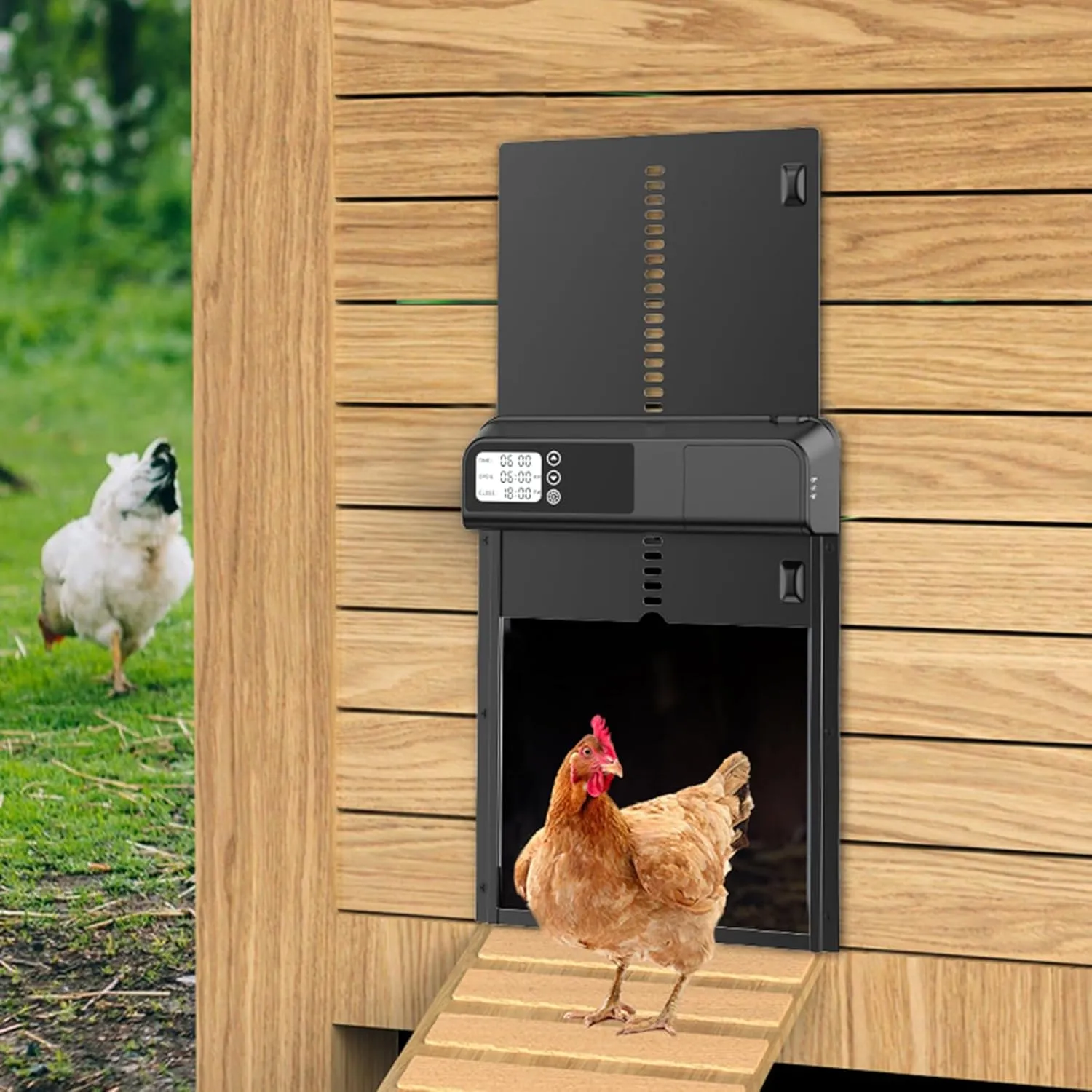
What is an Automatic Chicken Coop Door?
An automatic chicken coop door is a motorized system designed to open and close the entrance to your chicken coop automatically. This innovative device offers a convenient and secure way to manage your chickens’ access to their coop, ensuring their safety and well-being. Unlike traditional manual doors, automatic doors utilize sensors, timers, or light-sensitive mechanisms to control the door’s operation. This automation removes the need for you to manually open and close the coop door each day, saving you time and effort, especially during early mornings or late evenings. These doors are typically powered by batteries or electricity, offering reliable functionality in various environments. They play a crucial role in protecting your flock from predators, ensuring they can safely roost overnight, and allowing them to roam freely during the day.
Benefits of Using an Automatic Chicken Coop Door
Investing in an automatic chicken coop door provides numerous advantages for chicken keepers. These benefits extend beyond mere convenience, significantly improving the quality of chicken management. From enhancing the safety and security of your flock to providing greater flexibility in your daily routine, the advantages are considerable. These doors are not just about saving time they contribute to the overall health and happiness of your chickens while also offering peace of mind. The initial investment in an automatic door is quickly offset by the long-term benefits it provides, making it a worthwhile addition to any chicken coop setup. In this section, we will explore some of the most significant benefits in detail.
Improved Chicken Safety

One of the primary benefits of an automatic door is the enhanced safety it provides for your chickens. Predators, such as foxes, raccoons, and coyotes, are often most active during dawn and dusk. An automatic door ensures that the coop is securely closed before nightfall, effectively protecting your chickens from these nighttime threats. By automating the closing process, you eliminate the risk of human error forgetting to secure the coop, which could leave your flock vulnerable. Furthermore, many automatic doors are designed with robust locking mechanisms, making them difficult for predators to breach. This added layer of security gives you peace of mind knowing your chickens are safe and sound. The timely and secure closure of the coop is critical in preventing loss of poultry, and maintaining a healthy, stress-free environment for your flock.
Convenience and Time Saving
The convenience and time-saving aspects of an automatic chicken coop door cannot be overstated. For chicken keepers, especially those with busy schedules, the ability to automate the opening and closing of the coop door is a game-changer. No longer do you need to rush out early in the morning or hurry home in the evening to tend to your chickens. The door operates automatically, freeing up your time and providing flexibility. This is particularly beneficial during the changing seasons when sunrise and sunset times fluctuate, and it’s also helpful if you travel or have irregular work hours. With an automatic door, your chickens are cared for consistently, regardless of your personal schedule, ensuring they have access to the outside environment during daylight hours and are safely secured in the coop at night. This also allows you to sleep in without the need to rush to the coop early in the morning.
Enhanced Security
Beyond predator protection, automatic chicken coop doors also contribute to enhanced security in several ways. Many automatic doors are constructed with durable materials and secure locking mechanisms, making them more resistant to forced entry than manual doors. This added layer of protection not only deters predators but also prevents unwanted access to the coop, which could be caused by animals or even human interference. The automated closing and opening process can also help prevent your chickens from accidentally escaping or being locked out. Moreover, the consistent and reliable operation of the door ensures your chickens are always protected and secure, regardless of the weather conditions. This can reduce stress on your chickens and contribute to a healthier, more productive flock. The door ensures the coop is always securely closed at night.
Selecting the Right Automatic Chicken Coop Door

Choosing the right automatic chicken coop door requires careful consideration of your specific needs and circumstances. Various factors, including the size of your coop, the local predator threats, and your personal preferences, should influence your decision. Understanding the different types of doors available, their features, and the materials used will help you make an informed choice. It is essential to prioritize durability, reliability, and ease of use to ensure the door meets your requirements effectively. By taking the time to research and compare different models, you can find the perfect automatic door that provides both convenience and security for your chickens. The right door will also be easy to install and maintain.
Types of Automatic Chicken Coop Doors
There are several types of automatic chicken coop doors available, each with its unique features and benefits. The most common types include doors that open and close vertically, horizontally, or with a sliding mechanism. Vertical doors, which move up and down, are simple to install and operate, often powered by a motor and pulley system. Horizontal sliding doors, which move side to side, are another popular option that provides a streamlined look and can be easier to integrate into certain coop designs. Additionally, some doors come with built-in light sensors, which automatically open and close the door based on the ambient light levels. Others use a timer, allowing you to set specific opening and closing times. The selection will depend on your coop design.
Features to Consider
When selecting an automatic chicken coop door, consider these key features: a reliable motor that is weather-resistant, battery backup for power outages, and a safety mechanism to prevent the door from closing on a chicken. Ensure the door’s size is appropriate for your coop’s entrance and the size of your chickens. Look for doors made of durable materials, such as aluminum or UV-resistant plastic, to withstand the elements and potential predator attacks. Easy installation and user-friendly controls are also essential. Some doors offer additional features such as light sensors and timer settings. Furthermore, look for doors with a manual override function, which allows you to open or close the door manually if needed. Considering these features, can help you choose the perfect automatic door.
Materials and Durability

The materials used in the construction of an automatic chicken coop door significantly impact its durability and longevity. Doors made from high-quality, weather-resistant materials, such as aluminum or heavy-duty plastics, will withstand the elements, including rain, snow, and extreme temperatures. The door’s frame should be sturdy to prevent warping or damage and should also be resistant to rust and corrosion. The motor housing and control panel should be protected from moisture and dust to ensure reliable operation. Furthermore, the door’s locking mechanism should be robust enough to deter predators. Consider doors with reinforced edges or a reinforced design to prevent forced entry. Regular maintenance, such as cleaning and lubrication, can also extend the door’s lifespan and ensure its optimal performance. Choosing durable materials is vital for a long-lasting and reliable automatic chicken coop door.
Step-by-Step Guide to Building Your Own Automatic Chicken Coop Door
Building your own automatic chicken coop door can be a rewarding DIY project. This involves several key steps, from gathering the necessary materials to installing the motor and controls. This guide will walk you through each step, providing clear instructions and helpful tips to ensure a successful build. The process involves careful planning, accurate measurements, and attention to detail. Remember to prioritize safety throughout the build, and always follow the manufacturer’s instructions for any electrical components used. With patience and dedication, you can create a customized automatic door. The DIY approach allows you to tailor the door to fit your coop.
Gathering Your Materials
Before you start building your automatic chicken coop door, gather all the necessary materials and tools. You will need a door, which can be made of wood, metal, or durable plastic. You will also need a motor, which is typically a DC motor with enough torque to lift the door. Other essential components include a timer or light sensor to control the door’s operation, a power source (battery or electrical outlet), and wiring. Additionally, gather all the necessary hardware, such as screws, hinges, and a pulley system or sliding mechanism. Safety equipment, such as safety glasses and gloves, is also essential. Making sure all your materials are ready will make the building process smoother and more efficient. Double-check your material list to avoid any last-minute trips to the hardware store.
Cutting the Door and Frame

Once you have gathered your materials, the next step is to cut the door and frame to the appropriate size. Measure the opening of your chicken coop carefully to determine the dimensions of the door. Use a saw to cut the door material, such as wood or plastic, to the required size. If you are building a frame, cut the frame pieces to fit around the door opening. Ensure the frame is square and securely attached to the coop. Sand the edges of the door and frame to remove any splinters or rough spots. Proper cutting and fitting are essential for the door’s smooth operation and ensure a secure fit. Use appropriate safety gear when cutting the materials.
Installing the Motor and Controls
Next, install the motor and controls for your automatic chicken coop door. Mount the motor securely to the frame or coop, ensuring it is positioned correctly to lift or slide the door. Install the timer or light sensor according to the manufacturer’s instructions. Connect the motor to the timer or light sensor using the appropriate wiring. Position the door and connect it to the motor, using a pulley system or a sliding mechanism. Make sure the door moves smoothly and does not bind. Double-check all connections to ensure they are secure and that the door moves correctly in response to the timer or light sensor. This step is critical. Also, ensure that the motor does not obstruct the chickens.
Wiring the System
Wiring the system is a crucial step in building your automatic chicken coop door. Carefully follow the wiring diagrams provided with your motor, timer, and power source. Connect the wires correctly, ensuring that all connections are secure and protected from moisture. If you are using a battery, make sure it is properly connected to the motor and the timer or light sensor. If you are using an electrical outlet, ensure all wiring is done by a qualified electrician or according to local electrical codes. Proper wiring is essential for the safe and reliable operation of your door. After wiring, double-check all connections before powering up the system. Correct wiring prevents malfunctions or safety hazards.
Testing and Adjusting the Door

After installing and wiring the system, it’s time to test and adjust your automatic chicken coop door. Set the timer or light sensor to the desired opening and closing times. Power up the system and observe the door’s operation. Ensure that the door opens and closes smoothly and that the chickens are not obstructed. Make any necessary adjustments to the motor, timer, or door mechanism to ensure the proper function. Check the door’s closing mechanism to ensure it is secure and protects the chickens from predators. Once you are satisfied with the door’s operation, you are ready to use your new automatic chicken coop door. Perform multiple tests. Check for any potential hazards.
Maintaining Your Automatic Chicken Coop Door
Regular maintenance is crucial to keep your automatic chicken coop door operating smoothly and efficiently. This includes periodic inspections, cleaning, and lubrication. Proper maintenance will extend the life of the door and ensure the safety and security of your chickens. Make sure the door functions reliably every day by adhering to a maintenance schedule. By following these maintenance tips, you can keep your door in optimal condition and protect your flock.
Regular Inspections
Regular inspections are the first step in maintaining your automatic chicken coop door. Inspect the door’s components regularly for any signs of wear and tear. Check the motor, hinges, pulley system, and locking mechanism for any damage or loose parts. Examine the wiring for fraying or damage, and make sure all connections are secure. Test the door’s operation, verifying that it opens and closes smoothly and that the timer or light sensor is functioning correctly. If you find any issues during inspection, address them immediately to prevent further damage or malfunctions. Schedule inspections monthly or more frequently.
Cleaning and Lubrication

Regular cleaning and lubrication are essential for the smooth operation of your automatic chicken coop door. Clean the door, frame, and any moving parts regularly to remove dirt, debris, and other buildup. Use a mild detergent and water to clean the door and frame. Wipe away any excess moisture. Lubricate any moving parts, such as hinges, pulleys, and sliding mechanisms, with a suitable lubricant to reduce friction and prevent wear. This will extend the life of your door and keep it running smoothly. Apply the lubricant according to the manufacturer’s instructions. Be careful to avoid getting lubricant on any electrical components.
Troubleshooting Common Issues
Even with regular maintenance, you may encounter some common issues with your automatic chicken coop door. If the door is not opening or closing, check the power supply, timer settings, and motor connections. If the door is moving slowly or making unusual noises, lubricate the moving parts. If the door is not closing completely, check for obstructions or adjust the closing mechanism. Consult the manufacturer’s manual or seek professional help if you cannot resolve the issue. Proper troubleshooting will allow you to resolve issues.
Conclusion
Building and installing an automatic chicken coop door is a valuable investment that offers several benefits, including improved chicken safety, convenience, and enhanced security. By carefully selecting the right door, following the step-by-step guide, and maintaining it properly, you can create a safe and efficient environment for your chickens. The automation provided by these doors saves time, reduces stress, and gives you peace of mind, knowing your chickens are well-protected. Consider the long-term advantages, making this project a worthwhile endeavor for any chicken keeper looking to improve their flock’s well-being and simplify their daily routine.