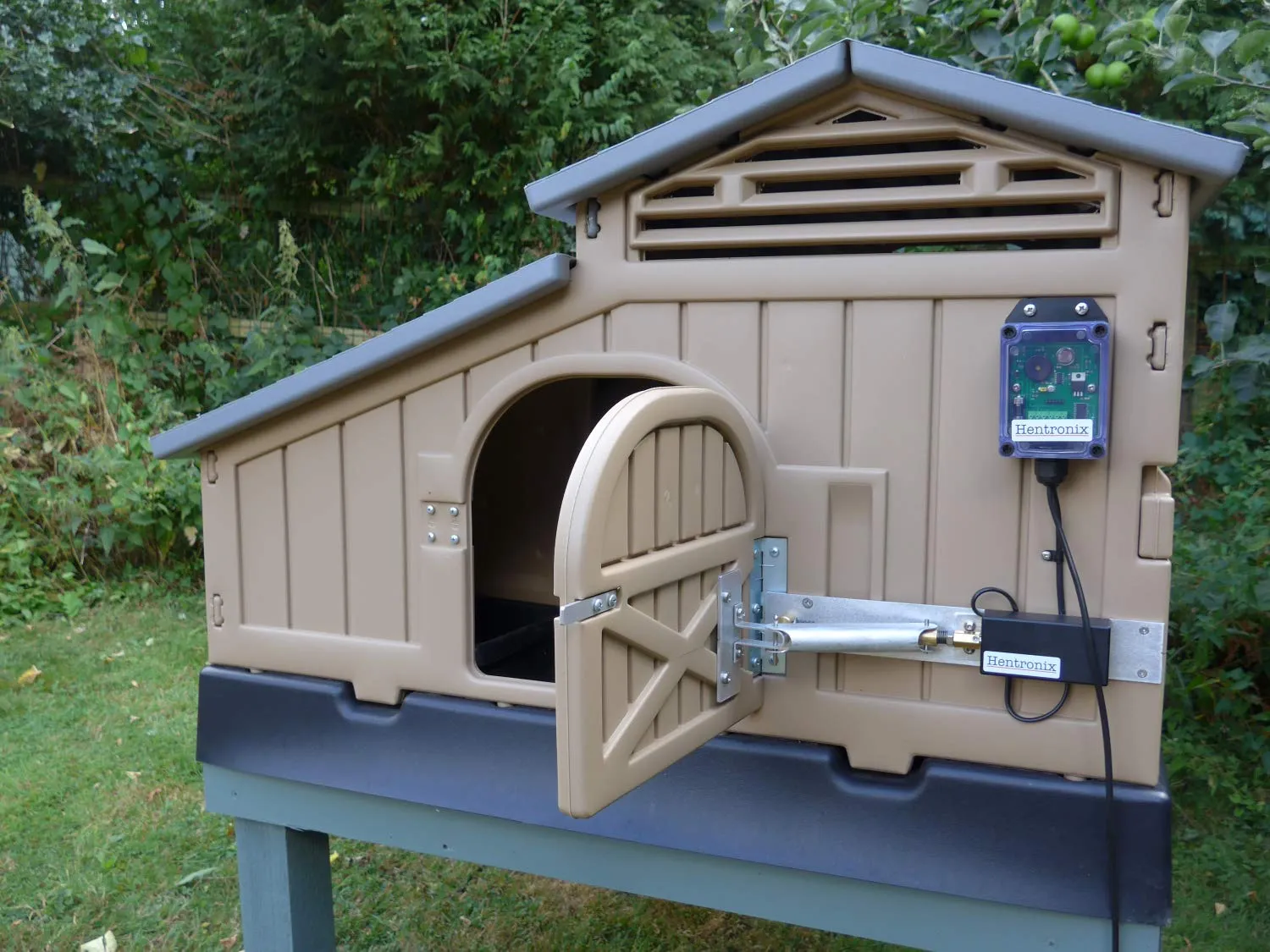
What is an Automatic Chicken Coop Door?
An automatic chicken coop door is a device designed to open and close your chicken coop door automatically, typically based on the time of day or ambient light levels. This ingenious invention brings convenience to chicken keeping, eliminating the need for manual opening and closing of the coop door. These doors are crucial for poultry keeping, as they enhance security, protect chickens from predators, and provide a consistent routine. They often come with a motor, a control system, and a door, and can be powered by batteries or solar panels, offering convenience and peace of mind to chicken owners. With an automatic door, you can ensure your chickens are safely tucked away each night, and let out to forage in the morning.
Benefits of an Automatic Chicken Coop Door
The advantages of using an automatic chicken coop door are numerous, greatly enhancing the efficiency and safety of raising chickens. One of the most significant benefits is enhanced security. By automatically closing the coop door at dusk, you provide crucial protection against nocturnal predators such as foxes, raccoons, and owls, who might otherwise be tempted by your flock. This feature provides chicken owners peace of mind, especially those who live in areas with high predator activity. The automatic door also offers convenience. Chicken keepers no longer need to be home at dawn and dusk to open and close the door, and can travel without relying on neighbors. Furthermore, automatic doors maintain a consistent schedule, reinforcing chickens’ natural behavior, which can improve their health and productivity.
Choosing the Right Automatic Chicken Coop Door

Selecting the right automatic chicken coop door is essential for optimizing your coop’s functionality and your chickens’ safety. Considerations include the type of door mechanism, the power source, and the dimensions of your coop’s opening. Look for durable materials that can withstand the elements, such as weather-resistant plastics or metals. The door should be sized to fully cover the opening of your coop and slide smoothly to prevent any gaps that predators could exploit. Pay attention to the power source; solar-powered doors offer an eco-friendly solution, while battery-powered models are convenient if sunlight is limited. Consider features like a light sensor for dusk and dawn activation, manual override options, and safety features to prevent injury to your chickens. Research customer reviews and choose a reputable brand to ensure the door’s reliability and longevity.
Types of Automatic Chicken Coop Doors
Automatic chicken coop doors come in a few distinct types, each offering unique features and benefits. The most common is the sliding door, which moves up and down along tracks, powered by a motor. Another design is the guillotine door, which lifts vertically and relies on gravity to close securely. Some doors also feature a ‘swing’ design, where the door opens sideways, though these are less common. The choice of door type often depends on the coop design and personal preference. Factors such as the available space around the coop opening, the level of predator protection needed, and the ease of installation and maintenance should also be considered. Carefully consider the door mechanism’s design to ensure that it suits your chickens’ size and the overall structure of your chicken coop.
Solar-Powered Automatic Chicken Coop Doors
Solar-powered automatic chicken coop doors provide an environmentally friendly and cost-effective solution for chicken keepers. These doors incorporate a solar panel that captures sunlight, converting it into electricity to power the door’s motor and control system. The major advantage of solar-powered doors is that they reduce the need for replacing batteries or connecting to a power outlet, making them ideal for remote locations or coops without easy access to electricity. The initial investment in a solar-powered door might be slightly higher, but the long-term savings on energy costs and battery replacements can be significant. Ensure the solar panel receives adequate sunlight, and consider the angle and orientation of the panel in relation to the sun’s path. Maintenance generally involves occasional cleaning of the solar panel to maximize its efficiency.
Battery-Powered Automatic Chicken Coop Doors

Battery-powered automatic chicken coop doors offer an extremely user-friendly setup for many chicken keepers. These doors operate on batteries, typically AA or D cells, providing a reliable power source regardless of sunlight availability or the proximity of an electrical outlet. Battery-powered doors are often easier to install and require less upfront investment compared to solar-powered alternatives. They also offer a degree of simplicity, as you don’t have to worry about panel placement or sunlight exposure. It is essential to monitor battery life and replace batteries as needed to prevent the door from failing, which could compromise the security of your chickens. The battery life varies based on the model and frequency of door use, so choosing a door with a low-power consumption design can help extend battery life and reduce maintenance.
Installing an Automatic Chicken Coop Door Step-by-Step
Installing an automatic chicken coop door is generally straightforward. Begin by carefully reading the manufacturer’s instructions. The first step is to prepare the coop door opening, ensuring it’s clean and the door frame is level. Next, mount the automatic door unit, usually by screwing or bolting it to the coop’s frame, positioning the door mechanism to align with the coop opening. After mounting, connect the power source by inserting batteries or connecting the solar panel, depending on your door model. Test the door’s operation by manually triggering it or setting the light sensor or timer. Calibrate the door settings to ensure it opens and closes at the desired times and that it doesn’t obstruct the chickens. Regular checks and adjustments are essential to maintain the door’s performance.
Tools and Materials You’ll Need
Before installing an automatic chicken coop door, gather the necessary tools and materials. You’ll likely need a screwdriver or drill, a level to ensure the door is mounted straight, a measuring tape for accurate positioning, and potentially a saw or knife for any necessary adjustments to the coop opening. The specific tools needed depend on the door model and coop construction. Make sure you have the correct screws or bolts to mount the door unit securely. If your door is solar-powered, ensure the solar panel is included and in good condition. If you opt for a battery-powered door, you will require the correct size and type of batteries. Always follow the manufacturer’s recommendations regarding installation tools and materials for your chosen door model.
Step 1 Preparing the Coop Door Opening

Preparing the coop door opening is a critical first step. Start by ensuring that the coop opening is clean and free of any obstructions such as loose wood, nails, or debris that might interfere with the door’s movement. If the opening is uneven, use shims or wood pieces to level it, providing a smooth surface for the door to slide along. Measure the opening accurately to confirm it matches the dimensions of your automatic door, ensuring that the door covers the entire opening when closed, leaving no gaps. If the opening needs modification to fit the automatic door, carefully trim the wood using appropriate tools such as a saw, being mindful of the coop’s structural integrity. A well-prepared opening ensures proper door function and helps maintain the security of your coop.
Step 2 Mounting the Automatic Door Unit
Mounting the automatic door unit involves attaching the motor and control system to the chicken coop. Position the unit so that the door mechanism aligns perfectly with the prepared opening. Using the appropriate screws or bolts, secure the door unit to the coop frame, ensuring it is level and sturdy. Most doors come with pre-drilled holes, which facilitate the mounting process. Make sure the door slides smoothly within its tracks or guides without binding. If the door has a separate control panel, secure it in a convenient location, often on the outside of the coop for easy access. Double-check that all screws are tightly fastened, and the unit is firmly attached to the coop to prevent any movement that could disrupt its operation. Following the manufacturer’s instructions precisely is essential for a successful and secure installation.
Step 3 Connecting the Power Source
Connecting the power source is a crucial step to getting your automatic door up and running. If you have a battery-powered door, insert the recommended batteries, usually AA or D cells, into the battery compartment, following the correct polarity. If you have a solar-powered door, connect the solar panel to the door unit, which usually involves plugging a connector cable. Make sure the solar panel is placed in a location where it receives direct sunlight for most of the day. If the door has a power cord, ensure it is plugged into a functioning electrical outlet. Once connected, the door should power on, and you can proceed to the next step of testing and calibration. Double-check the connections to ensure a reliable power supply and prevent any issues with the door’s operation.
Step 4 Testing and Calibration

Once the power source is connected, test the automatic chicken coop door by manually triggering the opening and closing mechanism. Most doors have a manual override button or control option. Observe the door’s movement to ensure it operates smoothly, without any obstructions or binding. If your door uses a light sensor, check if it opens at dawn and closes at dusk, as programmed. For doors with timers, set the desired open and close times and verify that the door functions accordingly. Adjust the settings as needed to accommodate local sunrise and sunset times. Calibration is essential to ensure the door works reliably and protects your chickens. Test the door several times after calibration to confirm its proper functioning.
Troubleshooting Common Issues
Several issues can arise with automatic chicken coop doors, but most are easy to resolve. If the door doesn’t open or close, check the power source: replace batteries if needed, or make sure the solar panel is getting enough sunlight. Ensure the door’s track or guides are free of debris, ice, or obstructions. Sometimes the door may get stuck because of the coop’s structure, check if the door is rubbing against the frame; adjusting or sanding the wood might solve the problem. If the door is opening or closing at the wrong times, recalibrate the light sensor or timer settings. For any mechanical problems, consult the manufacturer’s manual for troubleshooting tips. Regular inspections, prompt troubleshooting, and a little maintenance keep your automatic door operating smoothly, ensuring your chickens’ safety and your peace of mind.
Maintenance and Care of Your Automatic Door
Proper maintenance and care are vital for the longevity and reliable operation of your automatic chicken coop door. Regularly inspect the door and its components for wear and tear, such as frayed wires, loose screws, or damaged tracks. Clean the door, tracks, and sensors to remove dirt, debris, and any buildup that might interfere with its operation. Lubricate moving parts with a suitable lubricant to ensure smooth and quiet movement. If you have a solar-powered door, clean the solar panel regularly to maximize its sunlight absorption. Check the batteries periodically and replace them as needed. Follow the manufacturer’s instructions for maintenance and cleaning. Consistent upkeep ensures your automatic door functions optimally, providing continuous protection for your chickens and saving you time and effort.
Maximizing Your Coop’s Efficiency

Automatic chicken coop doors play a crucial role in maximizing the efficiency and security of your coop. Beyond the convenience of automatic operation, they ensure your chickens are safely enclosed at night and released each morning. To get the most out of your automatic door, combine it with other coop enhancements such as a well-designed coop, proper ventilation, and predator-proof features, like hardware cloth and secure latches. Consider the coop’s location and the surrounding environment when choosing the door type, such as the amount of sunlight and the local predator risks. Regularly monitor your chickens’ behavior, such as their egg-laying habits and overall health, to ensure they thrive in their automated environment. By carefully integrating an automatic door into your coop setup, you’ll achieve an efficient, secure, and low-maintenance chicken-keeping experience.