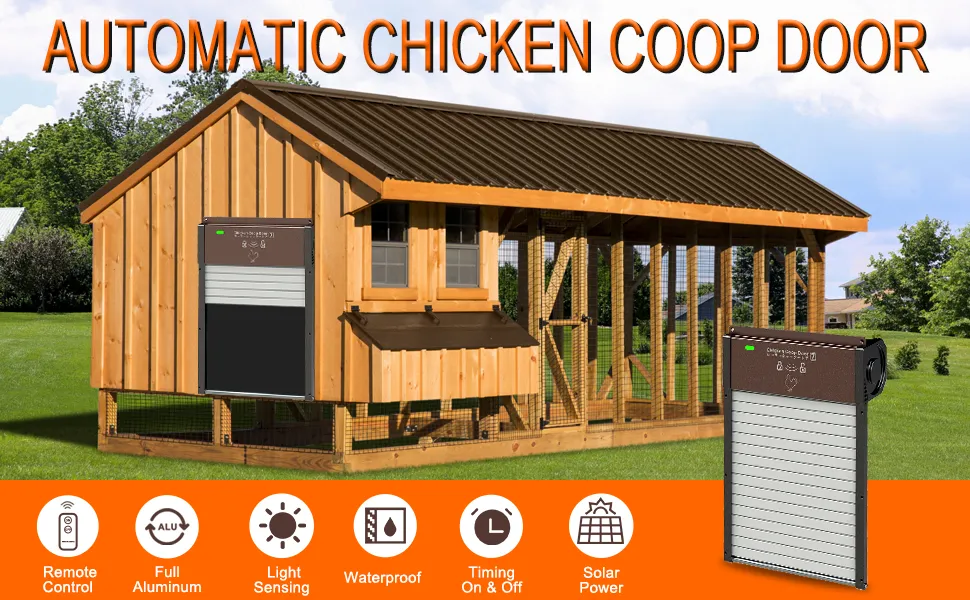
What is an Automatic Chicken Coop Door?
An automatic chicken coop door is a device designed to automatically open and close the entrance to your chicken coop. This innovative solution provides a safe and convenient way to manage your flock, ensuring they are securely locked in at night and released in the morning. These doors typically operate using a timer, light sensor, or a combination of both, allowing you to customize the opening and closing times based on your chickens’ needs and the local sunrise and sunset times. The primary function is to protect chickens from predators such as foxes, raccoons, and owls, which are most active during the night. They also offer convenience, eliminating the need for manual operation and ensuring consistent routines for your chickens, promoting their health and well-being. Understanding the basic functionality of an automatic door is the first step to embracing the benefits it offers.
Benefits of an Automatic Chicken Coop Door
Investing in an automatic chicken coop door brings numerous advantages for both chicken owners and their feathered friends. The most significant benefit is enhanced security. By automatically closing the coop door at dusk, it prevents nocturnal predators from accessing your chickens. This peace of mind is invaluable, particularly in areas with high predator activity. Moreover, these doors provide convenience. No more early morning or late-night trips to the coop; the automated system takes care of it all. This is especially helpful for those with busy schedules or who travel frequently. Another major advantage is that it regulates the chickens’ routine. Consistent opening and closing times help establish a predictable schedule, which can improve egg-laying consistency and overall flock health. Also, many doors are weatherproof, protecting chickens from the elements, and made from durable materials, ensuring a long-lasting investment in your flock’s safety and your convenience.
Choosing the Right Automatic Chicken Coop Door

Selecting the ideal automatic chicken coop door requires careful consideration of several factors. First, assess the size and weight of your chickens. The door should be large enough to accommodate your largest hen comfortably, and the lifting mechanism must be strong enough to lift the door. Consider the power source; battery-powered doors are common and convenient, but you’ll need to monitor and replace the batteries regularly. Solar-powered doors offer an eco-friendly and cost-effective alternative, especially in sunny locations. Evaluate the control mechanisms; light sensors are great for adapting to seasonal changes, while timers provide a fixed schedule. Think about the build quality and materials. Doors made from durable materials like aluminum or high-quality plastic will withstand the elements and predator attacks. Consider also ease of installation, looking for a door that comes with clear instructions and all the necessary hardware. Consider reviews and recommendations to find a reliable and effective product.
Types of Automatic Chicken Coop Doors
The market offers various types of automatic chicken coop doors, each with its own design and operational features. One common type is the sliding door, which moves vertically or horizontally, typically guided by tracks. These are popular due to their simplicity and reliability. Another type is the guillotine door, which lifts straight up and down. These can be very secure but might require more headroom within the coop. Roll-up doors, similar to those used in garage doors, are also available. These are space-saving but might be less resistant to predators if not constructed well. The primary difference is the type of sensors used for control. Some doors feature light sensors, which automatically open and close based on the ambient light levels. Others use timers, allowing you to set specific opening and closing times. Some models incorporate both, offering flexibility based on your specific needs. Consider the design, durability, and ease of installation when choosing the type that is best suited for your coop and chickens.
Factors to Consider Before Buying
Before purchasing an automatic chicken coop door, several key factors need careful consideration. First, determine the size requirements. Measure the coop opening and ensure the door’s dimensions are suitable. Consider your local climate; if you live in an area with extreme weather, look for a door with weather-resistant features. Think about the power source, battery-powered doors need battery changes, while solar-powered doors offer a more sustainable option. Assess the door’s security features, a sturdy and well-designed door will provide better protection against predators. Check the reviews and ratings to understand the door’s reliability and performance. Consider the installation process. Some doors are easier to install than others, so choose one that aligns with your DIY skills. Look for doors with safety features, such as a sensor that prevents the door from closing on a chicken. Finally, compare prices and warranties to ensure you are getting good value and protection for your investment. Taking the time to assess these factors will help you select the best automatic chicken coop door to meet your needs.
Installation Guide

Installing an automatic chicken coop door involves several key steps, each crucial for ensuring correct function and longevity. The process generally involves preparing the coop, mounting the door unit, and setting up the control box. The exact procedures will vary depending on the model, so always consult the manufacturer’s instructions. However, here is a general guide for installation.
Step 1 Prepare the Coop
Before installing the automatic door, prepare the coop. This usually involves removing any existing doors or obstacles from the coop opening. Ensure the opening is clean and the wood is in good condition. Measure the opening and ensure it is the correct size. If the coop opening is not the right size, you may need to make adjustments. Gather all necessary tools, including a drill, screwdriver, level, and measuring tape. Make sure you have sufficient space around the coop for the door mechanism and the control box. Check that all the installation hardware, such as screws and brackets, is included in the package. Make a checklist to ensure you have everything required before starting the installation. Make sure you understand the instructions before you start. Having a well-prepared coop will make the installation smoother and easier.
Step 2 Install the Door Unit
Once the coop is ready, install the door unit itself. This usually involves attaching the door frame to the coop opening, using screws. Ensure the door frame is level and square before securing it. Attach the door to the frame, making sure it moves freely along its tracks or guides. If the door has a lifting mechanism, install it according to the manufacturer’s instructions. This typically involves attaching the motor or pulley system to the door and the top of the coop. Connect the power source to the door unit, usually by connecting the battery or solar panel. Double-check all connections to ensure everything is secure and functioning correctly. Test the door’s movement to ensure it opens and closes smoothly. Make sure the door seals properly to prevent drafts and protect against predators. This step may require some adjustments to ensure the door operates efficiently.
Step 3 Set Up the Control Box

After installing the door unit, set up the control box. This is where you will configure the opening and closing times or set the light sensor settings. Connect the control box to the door unit, following the wiring instructions. Insert batteries or connect the power supply, depending on the door type. Refer to the user manual for specific programming instructions. Most control boxes have a user-friendly interface, such as a digital display or buttons. Set the opening and closing times based on your location’s sunrise and sunset times or choose a light sensitivity setting. Test the door’s operation several times to ensure the settings are correct. Ensure the door opens and closes at the right times, or when the light sensor detects sufficient or insufficient light. Make adjustments as needed until the system is running correctly and consistently. This ensures your chickens are safe and your schedule is maintained.
Troubleshooting Common Issues
Automatic chicken coop doors can sometimes encounter issues that require troubleshooting. One common problem is the door not opening or closing properly. This could be due to a dead battery, a faulty motor, or a jammed door. Check the battery and replace it if needed. Inspect the motor for any damage or blockages. Ensure the door tracks or guides are clean and free of debris. Another common issue is the door not responding to the light sensor or timer. Verify that the light sensor is correctly positioned and is receiving adequate light. Make sure the timer settings are correct and the system is properly programmed. Sometimes, the door might get stuck or the motor may not run, this might be due to environmental factors. Check for any physical obstructions or ice buildup. If the motor is making unusual noises, it might need lubrication or replacement. Always refer to the manufacturer’s troubleshooting guide. If you can’t resolve the issue, contact customer support for assistance. Regular maintenance and troubleshooting will keep your automatic door in excellent condition.
Maintenance Tips for Automatic Doors
Regular maintenance is essential to ensure your automatic chicken coop door functions properly and lasts for many years. Check the door mechanism regularly for any signs of wear and tear. Inspect the tracks, guides, and hinges for smooth operation, and lubricate moving parts with a suitable lubricant, such as silicone spray. Replace batteries regularly, even if the door seems to be working fine. Clean the light sensor and control box to ensure they are free from dirt and debris. Inspect the door for any signs of damage and repair them immediately. During winter, remove snow and ice buildup from the door and surrounding areas to prevent the door from getting stuck. Check all wiring connections for corrosion and replace damaged wires. Regularly test the door’s operation to confirm it opens and closes correctly. Keeping up with regular maintenance will extend the life of your door and ensure it reliably protects your chickens.
Conclusion

An automatic chicken coop door is a valuable investment for any chicken owner. From enhancing security and providing convenience to improving flock health, these doors offer numerous benefits. By understanding the different types, carefully considering the factors before buying, and following the proper installation and maintenance procedures, you can ensure your chickens are safe, and you enjoy the ease of automated coop management. Embrace the convenience and peace of mind that an automatic door provides, creating a safer and more efficient environment for both you and your flock. With the right choice and care, your automatic chicken coop door will serve you and your chickens well for years to come.