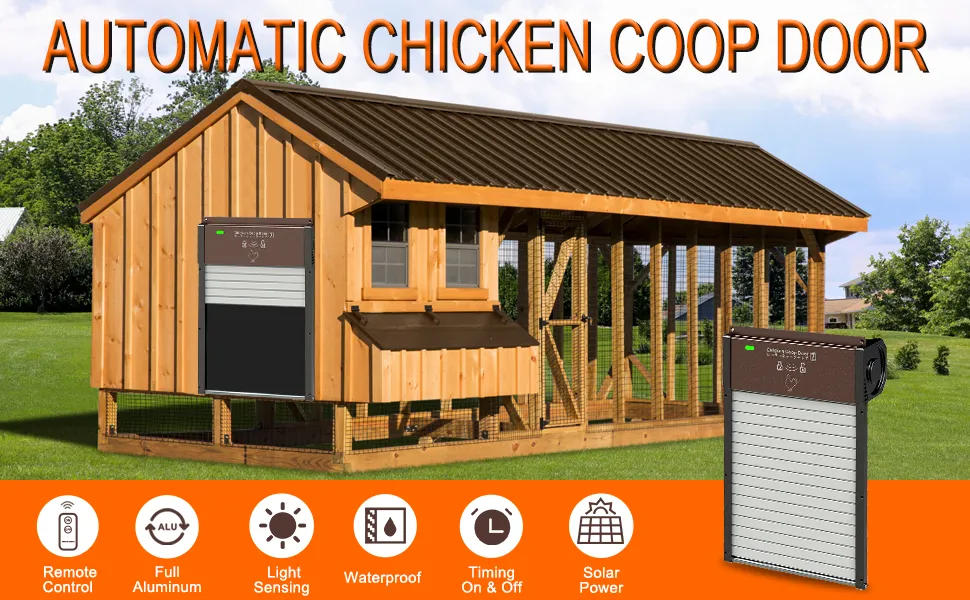
What are Chicken Coop Doors?
Chicken coop doors are essential components of any chicken coop, serving as the primary entry and exit points for your feathered friends. They are designed to provide security, protect chickens from predators, and control the environment inside the coop. Choosing the right chicken coop door is crucial for the health, safety, and overall well-being of your flock. These doors come in various types, materials, and designs, each offering different benefits depending on your specific needs and preferences. Understanding the different options available will help you make an informed decision and create a safe and comfortable home for your chickens.
Types of Chicken Coop Doors
There are several types of chicken coop doors, each with its own advantages. The best choice depends on your coop design, personal preferences, and the level of automation you desire.
Sliding Doors

Sliding doors are a popular choice due to their ease of use and ability to be automated. They typically move horizontally, either manually or with an automatic opener. Sliding doors are great for saving space, and they are usually very secure when closed. They work well for both small and large coops and are particularly useful in situations where space is limited.
Hinged Doors
Hinged doors operate much like a regular door, swinging open and closed on hinges. They are simple to install and can be made from various materials. Hinged doors can be a good option for smaller coops or when you prefer a traditional door design. Ensure the hinges are sturdy and the door closes securely to prevent predators from entering. They are also available in different styles, like a simple wooden door to a more decorative option.
Roll-Up Doors
Roll-up doors, similar to garage doors, roll up and down. These can be manually operated or automated. They are an excellent choice if you desire a door that is completely out of the way when open, allowing for maximum access to the coop. Automated roll-up doors offer convenience and can be programmed to open and close at specific times.
Door Materials

The material of your chicken coop door impacts its durability, security, and weather resistance. Selecting the right material is vital for creating a long-lasting door that effectively protects your chickens.
Wood
Wood is a classic choice, offering a natural look and easy customization. However, it requires regular maintenance, such as painting or sealing, to protect it from the elements and prevent rotting. Choose a weather-resistant wood, like cedar or redwood, for better longevity. Make sure the wood is thick enough to withstand predator attacks.
Metal
Metal doors are highly durable and offer excellent security against predators. They are resistant to weather and require minimal maintenance. However, they can be more expensive and may need to be treated to prevent rust. Make sure the metal is thick and the door is properly secured to the frame.
Plastic

Plastic doors are lightweight, affordable, and resistant to weather and pests. They require very little maintenance. Ensure the plastic is durable and thick enough to prevent predators from breaking through. While plastic is easier to clean and won’t rot, it might not be as secure as wood or metal.
Door Features
Beyond the basic materials and types, consider features that will enhance the functionality and safety of your coop door.
Security
Security is paramount for your chickens’ safety. Choose doors with strong latches, bolts, or locks that are difficult for predators to manipulate. Reinforce the door frame and consider using hardware cloth or metal sheeting to prevent animals from chewing or digging through the door. The latch must be predator-proof, and the door should fit snugly within its frame.
Weather Resistance

Weather resistance is crucial for protecting your chickens from the elements. Ensure the door is made of weather-resistant materials and properly sealed to prevent drafts, rain, and snow from entering the coop. Consider a door with a slight overhang to deflect rain.
Ease of Use
Choose a door that is easy to open and close, especially if you will be doing this manually. Consider the size and weight of the door and whether it is easy to operate for you and other family members. For maximum convenience, consider automatic doors that open and close on a timer or light sensor.
Door Automation
Automated doors offer convenience and peace of mind, especially if you are not always able to be present during dawn and dusk.
Automatic Chicken Coop Doors

Automatic doors open and close automatically, typically using a timer or light sensor. This means you don’t have to worry about opening and closing the door every day, and it offers protection against predators. These doors can also be battery-powered or use a solar panel, making them suitable for coops without electricity. The most reliable automatic doors feature a robust design and predator-resistant features.
Manual Operation
Manual doors are a more budget-friendly option, but require you to open and close the door each day. If you choose a manual door, make sure it is easy to operate and provides a secure closure. Consider a sturdy handle and a reliable latch to keep predators out. The ease of manual operation should be a key factor when selecting a door.
Size and Placement
The size and placement of your chicken coop door are critical for ease of use and the safety of your chickens.
Door Size Considerations

The door must be large enough for your chickens to enter and exit comfortably. Generally, a door that is approximately 12 inches wide and 18 inches high is sufficient for most breeds. If you have larger breeds, such as Brahmas or Jersey Giants, you may need a larger door. Consider the size of your chickens and ensure the door provides adequate space for them to move freely.
Placement for Chicken Coop Doors
The door should be positioned in a location that is easily accessible to the chickens and provides protection from the weather. Place the door near the ground to allow easy access for the chickens. Avoid placing the door in a location that is prone to flooding or strong winds. Consider the direction of sunlight and the position of the coop relative to prevailing winds when deciding on the door’s location.
Installation Tips
Proper installation is essential for the door’s functionality and security.
Preparing the Opening

Ensure the door opening is square and true. Remove any obstructions and make sure the frame is sturdy. If you are building a new coop, plan for the door opening during the construction phase. If you are retrofitting a door, make sure the opening is appropriately sized for the chosen door.
Installing the Door
Follow the manufacturer’s instructions or refer to DIY guides for proper installation. Ensure the door fits snugly in the opening and that the hinges, tracks, or other mechanisms are properly aligned. Use the appropriate screws and hardware to secure the door. Check the door’s operation after installation to ensure it opens and closes smoothly.
Sealing and Weatherproofing
Properly seal the door to prevent drafts, rain, and pests from entering the coop. Use weatherstripping around the door frame and consider adding a threshold to create a tight seal. Caulk any gaps to ensure the coop remains weatherproof. These measures will help protect your chickens from the elements.
Maintenance
Regular maintenance will ensure that your chicken coop door remains in good working order and continues to provide protection for your chickens.
Regular Inspections
Inspect the door regularly for any signs of damage, such as loose screws, warping, or wear and tear. Check the hinges, latches, and any automated components to ensure they are functioning correctly. Address any issues promptly to prevent further damage and ensure the door remains secure.
Cleaning and Lubrication
Clean the door periodically to remove dirt and debris. Lubricate hinges, tracks, and any moving parts to ensure smooth operation. Follow the manufacturer’s recommendations for cleaning and lubrication. Proper maintenance will extend the life of your chicken coop door and keep it functioning correctly.
In conclusion, choosing the right chicken coop door is crucial for the safety, health, and comfort of your chickens. Consider the different types, materials, features, and installation tips to select the best option for your needs. By understanding the factors involved, you can create a secure and convenient coop door that will protect your flock for years to come.