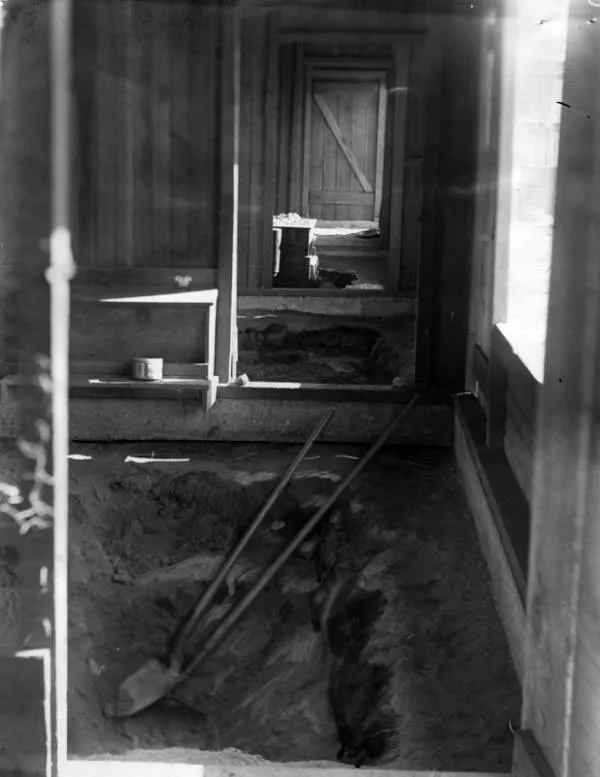
What Were the Wineville Chicken Coop Murders
The Wineville Chicken Coop Murders, a series of child abductions and killings that took place in 1920s California, remains one of the most disturbing and unsettling cases in American crime history. The crimes, which unfolded in the small town of Wineville (now Mira Loma), involved the abduction, sexual assault, and murder of several young boys. This horrific case captured national attention due to its brutality and the involvement of a young man named Gordon Stewart Northcott, who orchestrated these heinous acts. The Wineville Chicken Coop Murders not only exposed the dark underbelly of a seemingly quiet community but also raised questions about the vulnerability of children, the role of family dynamics, and the flaws within the justice system. Understanding the case requires delving into the details of the crimes, the investigation, the trial, and the lasting impact of this tragic event.
The Background of the Case
In the early 1920s, the United States was still reeling from the aftermath of World War I and the Spanish Flu pandemic. The economic prosperity of the era, however, did not reach everyone. The small town of Wineville was home to a diverse population, many of whom were struggling to make ends meet. The town was known for its agricultural production, particularly chicken farming, which gave rise to its name, reflecting the area’s rural character and the economic activities that sustained its residents. The backdrop of the Wineville Chicken Coop Murders, however, was a case of economic hardship. The community was relatively isolated, with limited access to resources and a sense of close-knit community, yet this also meant a lack of oversight and opportunities for criminal activities to go unnoticed. This environment created a context where the crimes could occur and remain hidden for a period, underscoring the importance of understanding the social and economic factors that played a role in this tragedy.
Gordon Stewart Northcott’s Crimes

Gordon Stewart Northcott, the primary perpetrator of the Wineville Chicken Coop Murders, was a complex and enigmatic figure whose actions defy easy explanation. Northcott was the leader of the horrific crimes, which took place on his family’s chicken ranch. Details about his early life are somewhat obscure, but he was known for his charismatic personality and ability to manipulate those around him, particularly children and young adults. Northcott’s crimes began with the abduction and sexual assault of young boys. He lured them to his family’s property, where he subjected them to unspeakable acts of violence. The exact number of victims remains uncertain, but it is believed that several young boys were murdered and buried on the ranch. Northcott’s crimes, which were committed with the assistance of his mother and others, were characterized by a disturbing level of cruelty and calculated planning. His actions were motivated by his personal desires, a desire to control, and perhaps, a profound lack of empathy. His role was the key to the gruesome events that unfolded in Wineville, and his actions remain a testament to the evil that can exist within a person.
Initial Investigations and Findings
The initial investigations into the disappearances of young boys in Wineville were hampered by the lack of modern forensic techniques and the close-knit nature of the community. Authorities initially treated the disappearances as routine missing person cases, but as more children vanished, suspicions began to arise. The local sheriff and detectives began to focus their attention on the Northcott ranch, based on anonymous tips and the increasing number of missing children. The investigation faced challenges, including the reluctance of some community members to cooperate with the authorities, fear, and the lack of concrete evidence. Key findings during the initial stages of the investigation included the discovery of disturbing items and unusual activities on the ranch. The authorities’ work was painstaking, involving interviews with witnesses, searching the property, and collecting physical evidence. These early investigations laid the groundwork for the eventual uncovering of the full scope of Northcott’s crimes. Despite the challenges, the investigators persevered, driven by a sense of justice and a desire to bring the perpetrator to justice.
The Role of the Ranch
The Northcott family’s chicken ranch served as the epicenter of the Wineville Chicken Coop Murders. The ranch provided a secluded location where Northcott could carry out his heinous crimes without detection. The property itself was relatively isolated, surrounded by farmland and offering a degree of privacy that allowed him to operate with impunity. The chicken coops and other structures on the ranch became sites of unspeakable acts. The ranch’s layout, with its hidden corners and secluded areas, gave Northcott opportunities to conceal his actions and dispose of evidence. The family’s control over the ranch was absolute, and this, in turn, made it easier for Northcott and his accomplices to avoid scrutiny. The role of the ranch underscores the importance of the physical environment in which these crimes occurred. It was a place where Northcott’s wickedness was given free rein, underscoring how a location can be a critical element in the commission of horrific acts. The ranch was the stage for the unfolding tragedy, a physical manifestation of the evil that transpired within its boundaries.
What Happened to the Victims

The victims of the Wineville Chicken Coop Murders were young boys, each with their own story and potential. The details surrounding their abduction and murder are horrific and tragic, illustrating the depth of Northcott’s cruelty. The boys were lured to the Northcott ranch through various means, including promises of work, friendship, or simply by being in the wrong place at the wrong time. Once at the ranch, they were subjected to brutal violence, sexual assault, and ultimately, murder. The victims’ bodies were often disposed of in secret, with the exact locations of some of the remains never fully recovered. The impact of their deaths on their families and the community was devastating, with the loss of each life leaving a profound void. The fate of the victims is a constant reminder of the suffering and devastation caused by Northcott’s crimes, with the young boys representing innocence lost and lives stolen. The stories of these victims, though fragmented, serve as a testament to the value of human life and the need to protect the most vulnerable in society.
Key Figures Involved
Beyond Gordon Stewart Northcott, several other individuals played critical roles in the Wineville Chicken Coop Murders. Sarah Louise Northcott, Gordon’s mother, was a key accomplice in the crimes. She actively participated in the abduction and abuse of the victims, helping to conceal evidence and cover up the crimes. Her involvement underscores the complex dynamics of family and the depths of manipulation and evil. Another key figure was Walter Collins, a father whose son was among the missing boys. The disappearance of Walter’s son, and his subsequent struggle to find him, led to the uncovering of the crimes. While the authorities initially dismissed Walter’s concerns, his persistence and determination eventually helped expose the truth. Other individuals involved were also prosecuted. Their involvement, whether as accomplices, witnesses, or enablers, shows how the tragedy encompassed a network of people, each with their own roles and responsibilities. The involvement of these figures serves to highlight the complex web of deceit and the various layers of complicity that led to these crimes.
The Aftermath of the Murders
The Wineville Chicken Coop Murders left a profound impact on the community and society as a whole. The town of Wineville was forever changed, with the crimes casting a shadow over its reputation and identity. The case triggered widespread fear and distrust, with parents becoming more vigilant and protective of their children. The local law enforcement and justice system also faced intense scrutiny, as the initial investigations and handling of the disappearances were severely criticized. The impact of the murders extended beyond the immediate community, sparking a national conversation about child safety, sexual violence, and the failures of the justice system. The aftermath included an increased awareness of the importance of protecting children and preventing such tragedies from happening again. The lasting legacy of these crimes includes calls for reforms in child welfare and the justice system. The impact of the Wineville Chicken Coop Murders continues to be felt, serving as a reminder of the fragility of human life and the importance of justice and protection.
The Trial and Conviction

The trial of Gordon Stewart Northcott and his accomplices was a dramatic and highly publicized event that captivated the nation. The trial was marked by intense media coverage and the public’s thirst for answers and justice. The prosecution presented a compelling case, with the testimony of witnesses and the introduction of physical evidence. The defense attempted to discredit the prosecution’s case, but the evidence of Northcott’s guilt was overwhelming. The jury found Northcott guilty of multiple counts of murder, and he was sentenced to death. His mother, Sarah Louise Northcott, was convicted of being an accomplice. The trial also exposed the flaws in the justice system, with questions raised about the efficiency of the investigation. The outcome of the trial brought a sense of closure to the families of the victims. However, it also left scars on the community, with the memory of the crimes remaining ever-present. The trial was a pivotal moment in the story of the Wineville Chicken Coop Murders, providing a platform for the exposure of the crimes and the justice system’s efforts to bring the perpetrators to account.
Impact and Legacy of the Wineville Chicken Coop Murders
The Wineville Chicken Coop Murders continue to resonate in the collective consciousness of the American public. The case is a grim reminder of the capacity for evil and the vulnerability of children. The murders sparked calls for reform in child protection and the justice system, highlighting the need for greater oversight and accountability. The case has inspired numerous books, documentaries, and films, ensuring that the story continues to be told and studied. The legacy of the Wineville Chicken Coop Murders includes the importance of remembering and learning from past tragedies. The case led to the establishment of improved child welfare practices and strengthened legal protections for children. The impact of this case serves to underscore the value of life. It pushes us to confront the darkest aspects of human nature. The legacy of this case is a call for vigilance, empathy, and action. It is a reminder of the necessity to protect the innocent and to strive for a more just and compassionate world.